Advisory 03 · Sign-up and referrals
Sunzee1 registration and referral codes
Registration is free, which is exactly why it works. The cost is not at the sign-up step. It is in what registration is designed to lead to, and in what a referral code makes you responsible for.
No sign-up form, no referral code
This page will not register you for anything. sunzee1.app carries no referral link and no download button, because the moment an advisory earns commission from the thing it reviews, it stops being an advisory.
Free registration is a business decision, not a courtesy
Every platform in this category makes signing up free, instant and frictionless. Usually there is a welcome bonus attached — a small balance credited to your account, visible on a dashboard, that you cannot withdraw until you make a deposit.
That bonus is the most efficient piece of engineering in the whole product. It creates an account that already feels like yours, with a number in it that already feels like money, and a single clearly-marked action standing between you and it. Behavioural economists call this the endowment effect: we value what we already believe we own far more than we value the identical thing before we own it. The bonus is not generosity. It converts a stranger into someone protecting a position.
What follows registration is a sequence, and it is broadly the same on every platform of this shape: the welcome credit, then a notification that your bonus expires in 48 hours, then a "limited slots" message on a higher-return plan, then a small deposit, then a small successful withdrawal, then a much larger deposit. Each step is individually reasonable. The sequence is the product.
What you hand over at sign-up
Registration is free of money. It is not free of information. You typically provide a phone number, an email address, a password, and later a wallet address, and in many cases a CNIC or ID document for "verification".
Consider who receives that. On Sunzee1 there is no disclosed company, no named director, no registered office and no jurisdiction. You are handing identity documents to an entity that has published nothing verifiable about itself. There is no privacy regulator you can complain to, because there is no identified party to complain about.
- Your phone number enters a resale marketNumbers collected by these platforms circulate. Expect calls and WhatsApp messages about other schemes; the first sign-up frequently produces a stream of them.
- Your email becomes a targeting hookEspecially valuable to whoever runs the follow-on "fund recovery" scams that target people already known to have lost money.
- A reused password compromises everything elseCovered on the login page, and it is the most under-appreciated risk in the whole process.
- Your CNIC image is not recoverable once sharedUploaded ID documents can be used for account opening elsewhere in your name. Never send ID to a platform whose legal owner you cannot name.
The referral code is the actual business model
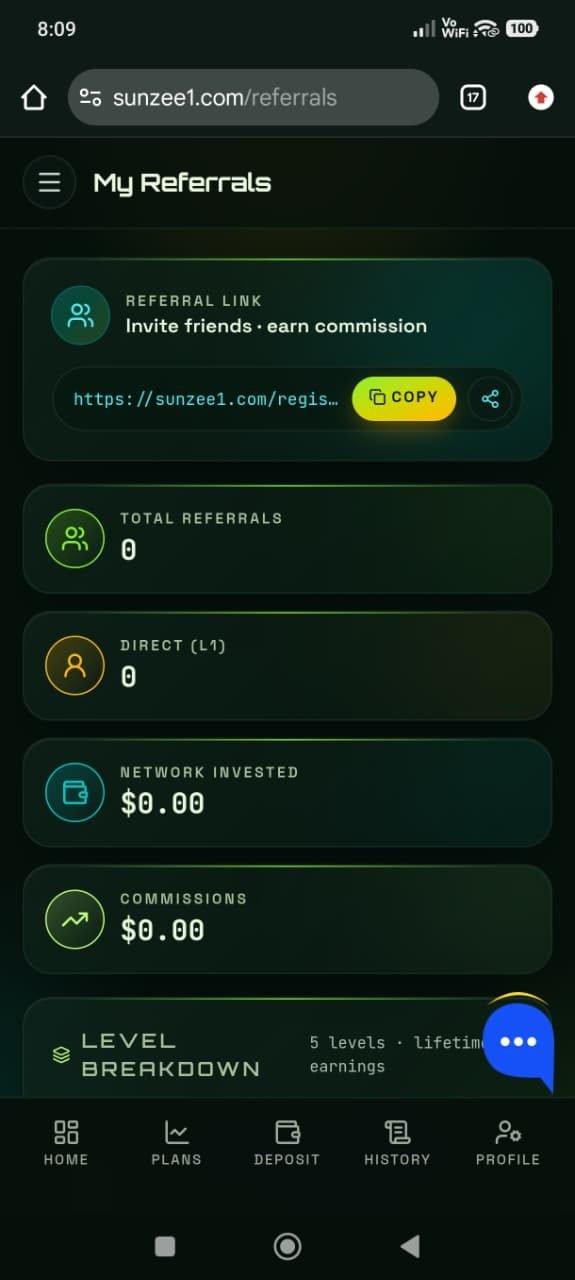
Here is the part worth sitting with, because it explains everything else.
Search for reviews of this platform and look carefully at the results. Video after video, and the description underneath contains a registration link with a referral parameter attached. The person telling you the platform is genuine is paid when you join. That is not a review; it is a commission-driven advertisement wearing a review's clothes.
This is not a criticism of the individuals doing it. Most are not fraudsters. Many are people who deposited, received a small payout, sincerely believed it worked, and were then offered a commission to tell others. That is precisely the design: the platform converts its own users into an unpaid sales force at zero marginal cost, and every recruit brings deposits that fund the payouts keeping the recruiter convinced.
Where the money comes from TWO MODELS
Ask one question of any earning platform: if nobody new joined tomorrow, could it still pay everyone? A business selling electricity to a utility could. A scheme paying members from members' deposits could not. That question separates the two categories more reliably than any review.
The Federal Trade Commission puts the same warning in its own guidance on spotting investment scams: it advises that you should never commit money to an investment purely on the strength of what someone claims or what you read in an online review or blog, because scammers routinely invent stories and testimonials about how well people are doing.
Roman Urdu · Sab se ahem baat
Ek sawal poochein: agar kal se koi naya banda join na kare, to kya yeh platform phir bhi sab ko paisa de sakta hai? Asli business de sakta hai. Jo naye deposits se purane logon ko paisa de raha ho, woh nahi de sakta.
Jo banda aap ko referral link de kar keh raha hai "yeh app sahi hai" — usay aapke join karne par commission milti hai. Woh review nahi, ishtihaar hai. Aur agar aap aage kisi ko join karwate hain, to nuqsan hone par ilzaam bhi aap par aata hai, kyunki app wale to gayab ho jate hain.
Promoting it carries real exposure — this is the part nobody mentions
If you register, take a referral code and start enrolling friends, family and WhatsApp contacts, your position changes in a way that is easy to miss.
When the platform stops paying — and schemes funded by recruitment do stop paying — the operators are unreachable. They are anonymous, offshore, and the domain goes dark. The people who lost money do not have a founder to confront. They have you. You are the name they know, the number they have, and the person who told them it was safe.
That is a social catastrophe before it is a legal one, and the social part is usually the worse of the two. But the legal part is real. Soliciting public investment without SECP authorisation is an offence in Pakistan, and fraud committed through electronic means falls under the Prevention of Electronic Crimes Act 2016. Enforcement in this area has been substantial: in July 2025 the National Cyber Crime Investigation Agency raided a facility in Faisalabad and arrested 149 people in connection with an online fraud operation involving Ponzi schemes and investment scams. Operations of that kind sweep up promoters and mid-level recruiters, because those are the people physically present and identifiable.
If you have already shared a link, the useful thing to do is not to feel ashamed about it. It is to message the people you sent it to today and tell them what you have since learned. That is genuinely the single highest-value action available to you, and it is available right now.
Questions people ask
Is it safe to register if I never deposit?
It costs you no money, but you give personal data to an unidentified operator and you enter a conversion funnel built specifically to move you from registered to depositing. Most people who lose money did not intend to deposit when they signed up.
Do I need a referral code to register?
Usually not, but every promotion carries one because the promoter is paid per sign-up. The presence of a code tells you how the platform grows, which is the most useful thing you can learn about it.
I already invited people. What should I do?
Tell them, today, in the same group where you shared the link. It will be uncomfortable for about ten minutes. It is the one action that reliably prevents further loss, and the people you warn will remember that you did.
Can I be prosecuted for sharing a referral link?
This is not legal advice, but promoting an unlicensed investment scheme carries genuine exposure in Pakistan, and recruiters have been arrested in enforcement operations. If you have promoted at scale, speak to a lawyer.